As 2026 ends, the food and beverage industry trends show significant shifts towards authenticity and regional specificity.
Global flavor profiles drive innovation, with consumers desiring more nuanced tastes rather than vague labels.
Ranch dressing gains international popularity, merging Americana with global appeal and opening doors for ‘ranchification’ abroad.
Sensory maximalism trends emphasize visual and taste experiences, moving beyond just Instagrammable aesthetics to full sensory engagement.
Dairy and fruit combinations, along with swavory concepts, continue to gain traction, blending traditional flavors with modern consumer preferences.
With the first half of 2026 firmly behind us and 2027 fast approaching, it’s that time of year again. The time for our annual look at the food and beverage industry trends that have shaped the year to this point, and what they mean for the home stretch of 2026 and into next year.
The time for our annual look at the trends that have shaped the year to this point, and what they mean for the home stretch of 2026 and into next year.
Translating Food and Beverage Industry Trends IRL
In last year’s edition, “Food & Beverage Trends Defining 2025 & A Look Ahead to 2026,” we highlighted how social media has democratized development, and how impressions, likes, and reshares might as well be considered modern-day focus groups.
However, as recent macro food and beverage industry trends transition from disruptions to market staples, something else is becoming abundantly clear.
The internet is and isn’t real life, at least for developers.
That viral tteokbokki croissant, ube coconut pandan latte, or black tahini brown butter chocolate chunk cookie might be legitimate hits and successful concepts… at the local bakery or cafe, that is.
But that doesn’t necessarily mean that they are ready for prime real estate on store shelves. At least not yet anyway.
“Local shops are in a unique position. They’re able to experiment with and adopt new concepts without substantial cost upfront. CPG manufacturers on the other hand face a much higher bar for scale,” says Yutian Xu, Digital Marketing Analyst at Edlong.
“A concept can be genuinely successful on the ground without being ready for the retail shelf just yet.”
This is where brands have the difficult task of threading the needle with innovative concepts and trending flavors. It can be a legitimately successful on-the-ground trend, but still needs more time to mature and prove its scalability first.
Not everything is Dubai Chocolate. However, as we’ve seen with profiles and ingredients like ube, miso, tahini, and gochujang in recent years, it may just take time.
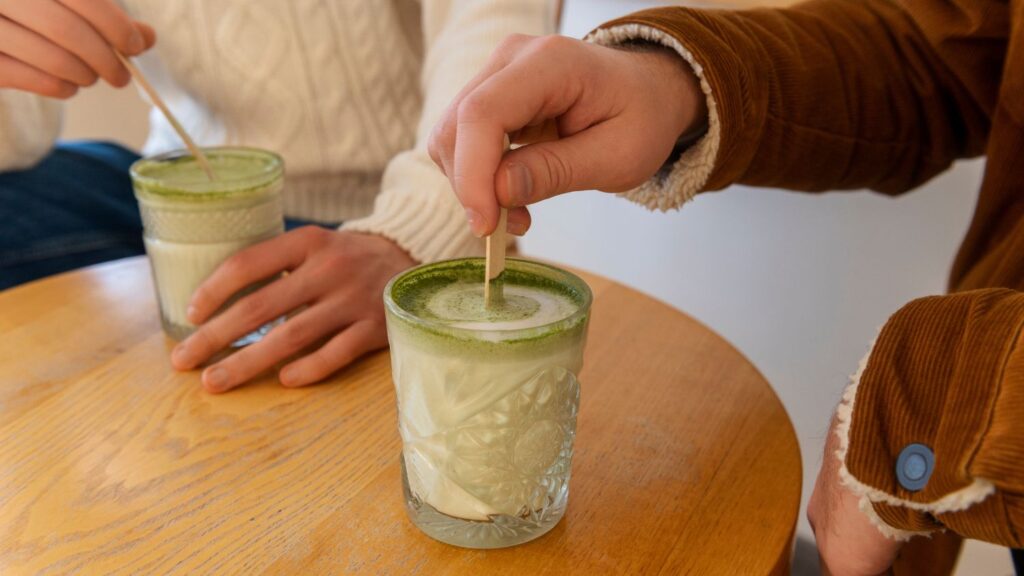
A perfect example of this is Matcha. A decade and a half ago, it was just a drink on the menu.
Today, it’s such a staple that it’s garnering it’s own shops where it is the only drink on the menu.
Now, if you noticed, there is something all of the profiles mentioned here have in common, and that’s our first trend.
Cross-Cultural Exchange Continues to Shape Food and Beverage Industry Trends
And based on what 2026 has shown us, and what’s on the horizon, we’ll be discussing it for years to come.
Global flavor profiles are now one of the biggest drivers of innovation, and consumers can’t get enough.
In fact, 2 in 3 consumers are interested in exploring new foods. But how developers respond to this demand is already starting to look a bit different.
In a recent article, Edlong’s Application Managers of EMEA/APAC and LATAM, Susan O’Shaughnessy and Nestor Vazquez, respectively, explain how regionality and specificity are changing the face of global food and beverage industry trends.
“In the past, global food offerings were very vague and generic,” says Vazquez
“You’d have your products labeled with ‘Asian’ or ‘Mediterranean’ flavors; if you were lucky, it might have a country attached to it like Italian, Chinese, or Mexican. But that’s no longer enough for today’s consumers…. Before, someone in the U.S. or Canada would be okay with just ‘Mexican cheese’, but now more people are specifically looking for things like Queso Oaxaca, Cotija, or Chihuahua.”
O’Shaughnessy adds, “Here in Europe we’re seeing this same move towards greater authenticity and regionality. Instead of just flooding the market with ‘Asian’ or ‘Korean BBQ’ flavors, people are looking for gochujang or Sichuan peppers. The same goes for Mediterranean and North African profiles like za’tar and harissa.”
“These satisfy not only the desire for something global but also that for more complex spice profiles. They’re fermented. They’re fruity. They’re smoky. They’re less about a simple thing like heat, and more about elevating the entire experience.”
Xu agrees, adding, “We’re seeing this specificity lead to more interesting and innovative flavor concepts across nearly all markets.”
Another aspect of the macro shift towards international ingredient profiles is that cultural exchange goes both ways.
Ranch: No Longer Hidden in the Valley
“American culture has already been exported everywhere. But with the US being a host country for the World Cup, people from around the world had the opportunity to discover and experience things firsthand like never before. The winner of this was clearly Ranch dressing,” says Silvia Schnicker, Director of Marketing at Edlong.
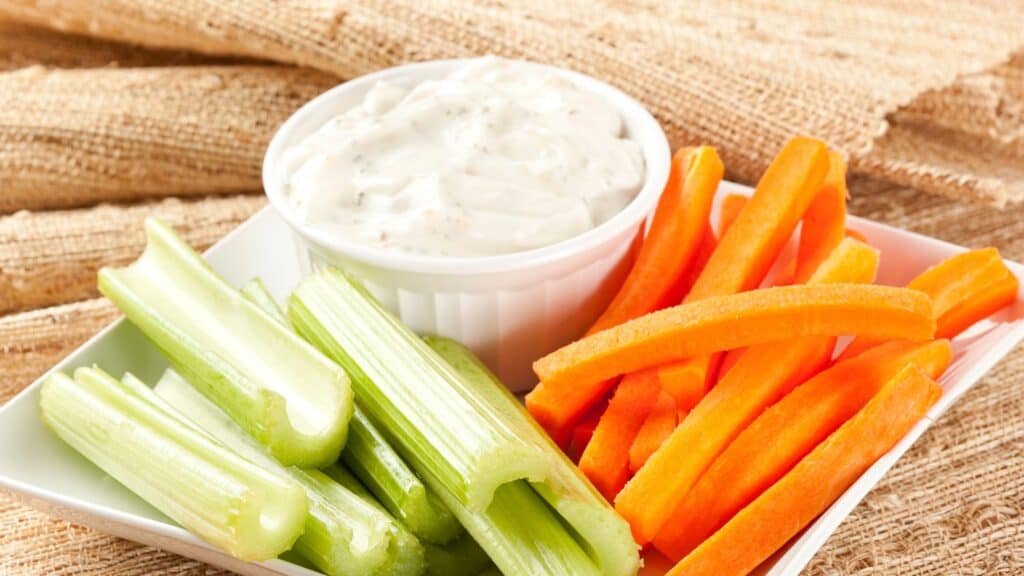
Healthy snack of celery and carrot sticks with ranch dip, perfect for food and beverage industry trends.
“Ranch has long been of the most popular flavors in the US and continues to trend regularly with different twists and varieties. With airports selling bottles after TSA checkpoints, I would expect that we’ll see a wave of ‘ranchification’ throughout international markets. It’s profile is unique yet familiar, and it balances a sense of Americana with global appeal. Not to mention it makes the perfect canvas for local and regional takes on it.”
Snack seasonings, dips, sauces, either as is or paired with local flavors, open up a literal world of possibilities for ranch-flavored applications.
Similarly, regional flavor profiles centered on savory, smoky, and sweet brown notes are increasingly finding opportunities beyond their origins. From the robust seasoning and roasted depth of Cajun-inspired foods to the sweet barbecue flavors of Kansas City, the smoke-forward character of Texas barbecue, and the layered complexity of Carolina styles, these taste experiences combine familiarity and authenticity in ways that can appeal to consumers worldwide.
Yet, while social media is helping to introduce these profiles to new audiences, Instagramability alone is no longer enough.
Sensory Maximalism: Engaging All of the Senses
In this year’s flavor trends report, “Shaping Tomorrow”, we highlighted ‘ Sensory Maximalism’ as one of our top five food and beverage industry trends to define 2026.
This was on full display at IFT FIRST 2026, the industry’s largest ingredient expo.
According to Xu, bold natural colors were a major takeaway from this year’s show.
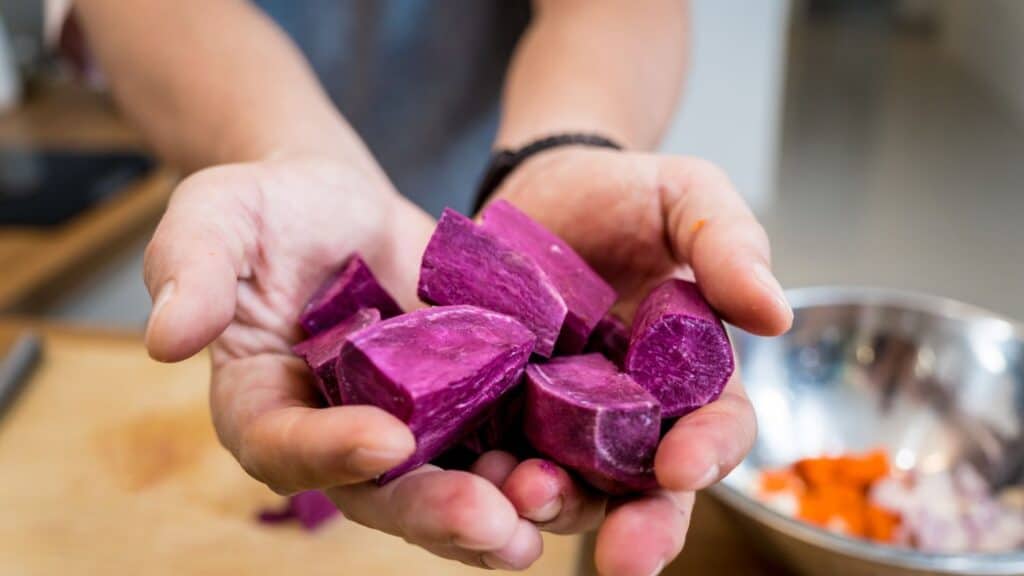
“I saw a lot of purples this year, especially from things like ube. There was one booth that had an ube coconut cream-flavored demo that ran out quickly because people were just going crazy for it.”
“Innovation around these natural color systems is likely to continue. Again with purple, for example, components like butterfly pea, blackberry, or chicha morada can provide that natural, yet visually striking aesthetic people want.”
Schnicker agrees, believing that as we look to the future, this will only continue growing stronger. But with a caveat.
“We’ve all heard of love at first sight, but for products to be successful, it also needs to be love at first bite,” says Schnicker.
“There was a period where being ‘Instagrammable ’ was enough for a food to go viral. So much so that we coined that term for it. However, the dopamine hit of pleasing aesthetics alone doesn’t cut it anymore. Social media has highlighted how much we eat with our eyes, but now people want an experience that offers that instant gratification, while also engaging all of their senses.”
She continues, “Not only does it have to be striking visually, but when they take that first bite or sip, they want to experience something new and unique. Crunchy, crispy, creamy, the more layers and senses engaged the better.”
Food and Beverage Industry Trends: Drinks Continue Getting Dirty
From brand partnerships to timely LTOs, developers are always looking to capitalize on the latest viral food trends.
Dirty soda is a great example. By early 2024, this viral trend had major brands rushing to collaborate and offer their own versions, like dirty soda coffee creamers.
With dedicated chains opening locations across the country and major food service retailers adding these beverages to their menus in droves, they might be here to stay.
Schnicker explains, “Dirty sodas, and a general ‘dirty-fication’ of things are a perfect illustration of multi-sensory engagement. It’s why we thought it important to include it as one of our demos at IFT First this year.”
“From the moment you pour in the cream, and you see all the legs trickle and swirl through the beverage your senses are engaged. It’s movement. Visual, textual, and tasteful layers that offer instant gratification and satisfaction. But it doesn’t have to be just soda and cream. We’re seeing things like dirty chai and matcha coming back in vogue. While not the same, it’s about the dance between complementary and contrasting tastes, textures, colors, etc. In fact, I think this ‘dirty-fictaction’, could end up going beyond beverages altogether.”
The same can be said about another trend from last year that, given its current trajectory, is likely to gain fixture status.
Cold Foam Innovations Are on Cloud Nine
Cold foams are showing that sensory maximalism is a trend with staying power.
From fruity and sweet brown-flavored offerings to functional, protein-packed layers, cold foams are more than a topping; they’re an invitation for experimentation.
With brands unleashing their full cold foam creativity, it might be time to go beyond cafe beverages.
“We’re starting to see cold foam pop in more places, like cocktails and mocktails. But it’s not only in beverages,” states Xu.
“Cold foam’s versatility offers potential across so many applications. Really, anywhere that can benefit from that extra layer of indulgence or creamy texture is a possibility. This could mean desserts and sometimes even savory dishes.”
This elevated indulgence is also the driving force behind another growing trend.
A Match Made in Heaven: Dairy and Fruit Flavor Trends Expand
Whether it’s peaches and cream, apple pie à la mode, or strawberry and cherry ice cream, this balance of bright fruity acidity and rich dairy indulgence is nothing short of classic.
While these continue to thrive in nostalgia-forward offerings, citrus and sour dairy pairings are now entering the limelight.
Like the other dairy-fruit combinations, orange cream evokes a deep sense of nostalgia for many. But outside of this, citrus and dairy have remained rather rare.
That is until now.
Xu explains, “Fruity in dairy applications or dairy in fruity flavors are really starting to grow this year, especially the trend of bright, creamy citrus combinations. The fact that citrus is known to curdle dairy makes this pairing seemingly incompatible. But with things like orange cold foam and citrus yogurt drinks releasing in the U.S. social media trends from China like lemon milk finding their way into food service, and products like lemon tarts and tiramisu showing up on store shelves, this is definitely something to watch.”
While seemingly an unorthodox pairing, pairing creamy indulgence with citrus and sour, acidic fruits covers many of the food and beverage industry trends already discussed above.
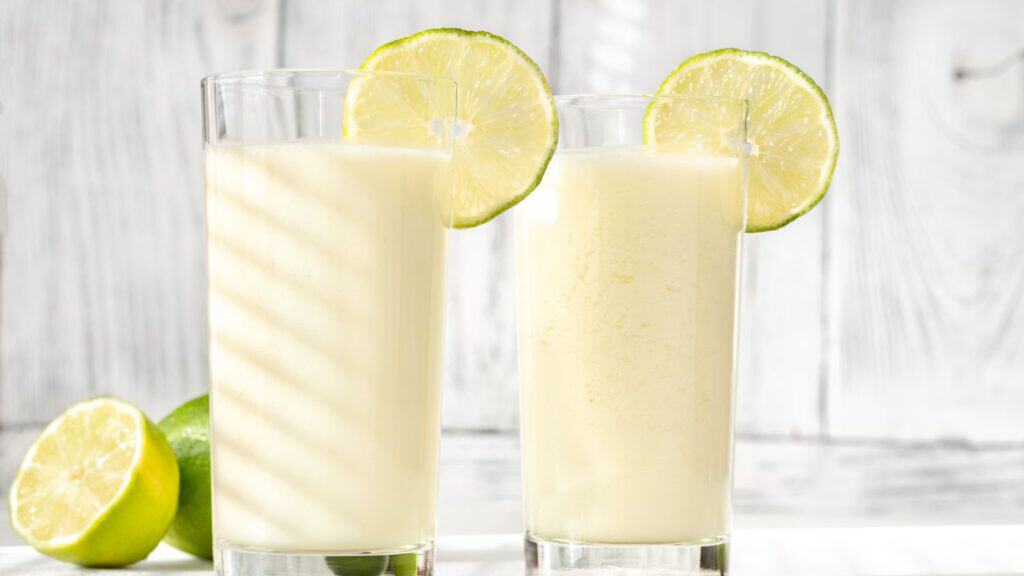
Viral trends like Swiss or ‘Brazillian lemonade, and carlota de limon which combines citrus and condensed milk into a novel yet familiar global summer treat, help highlight the appetite for such concepts.
“In addition to trendy yet nostalgic applications like a dirty frozen lemonade, fruits like yuzu, calamansi, or passion fruit provide opportunities for internationally-inspired innovation,” illustrates Xu.
Say “Cheese…and Fruit”
Dairy and fruit also continue to offer sophistication well beyond sweet treats.
As Schnicker describes it, “Fruit and cheese is a universally loved pairing that works just as great as a flavor profile as it does on a charcuterie board.”
“Cranberry and cheese, for example, can work as a standalone cheese, a dip, or a chip seasoning. Guava and cheese, a Latin American favorite, could succeed equally well in both savory and sweet applications. Similarly, cream cheese and other soft cheeses pair beautifully with sweet spreads or swicy pepper jams for a shareable snack. Or again an intriguing flavor profile concept.”
Creamy and indulgent, with opportunities for swavory and swicy fruit-and-cheese profiles, perfectly fit where the market is headed.
Swavory: The Food and Beverage Industry Trend Crossing Categories
Swicy (sweet and spicy) continues to steal the headlines, in large part due to hot honey’s growing popularity. However, while it continues to gain acceptance, what’s happening with swavory concepts might be even more interesting.
“Swavory [sweet + savory] as a concept is nothing new, but what chefs and brands are doing with it are. The familiarity of sweet and salty, or umami, allows niche concepts to prove themselves in restaurants, and instill greater confidence for brands to bring them into stores.”
“While this is a way to add complexity to many sauces and dishes, the boundary between sweet and savory occasions is becoming less rigid. Embracing this shift is leading to headline ready dessert concepts such as swavory soft serve and profiles like pistachio tahini, miso caramel, and more.”
Why Bitterness Masking Technologies Matter Bitterness masking technologies are increasingly important because bitterness can appear across a wide ... Read more