
Key Takeaways
- The plant-based food market experienced significant growth but now shows a decline in trendiness.
- Consumers initially wanted plant-based alternatives but were less willing to compromise on taste and texture.
- Developers shifted focus from direct replacements to leveraging unique benefits of plant-based ingredients.
- Plant-based products excel in indulgent applications, particularly plant milks, which enhance taste experiences without mimicking dairy.
- Taste and texture challenges remain, but Edlong’s taste technologies help improve overall sensory experiences in plant-based formulations.
Not long ago, plant-based foods were taking the food and beverage industry by storm. A big part of their appeal comes from the unique plant based flavor that sets them apart from traditional options.
Every trade show, publication, and retailer went above and beyond to show that these plant-based and animal-free alternatives were the market’s future.
Growth in this space over this period has been undeniable. In the U.S. alone, plant-based retail sales more than doubled from $3.3 billion in 2018 to $7.9 billion in 2025.
That said, look at these same outlets today, and that overwhelming fervor from a couple of years ago is much harder to find.
Yet, the future outlook for plant-based developers remains extremely optimistic. That’s because although many consumers might be over the “plant-based” label push, that doesn’t mean they’re over plant-based ingredients and products. For developers, that puts the focus on plant-based flavor. This is because taste and texture are what decide whether a product meets expectations.
We sat down with Julie Drainville, Director of Global Sensory & Innovation at Edlong, to learn more about where the plant-based market finds itself and where it’s headed. In addition, we wanted to know the challenges it faces, including how plant-based flavor technologies can help.
What is the current state of plant-based flavor in the food & beverage space?
Drainville: At a glance, it’s not ‘trending’ the same way that it was before. But before we look at where it is now, we probably need to ask why that is.
At the peak of the plant-based buzz, consumers were saying they wanted more plant-based alternatives and were willing to compromise on taste and texture to get them. The food and beverage industry as a whole dived in head-first.
But as it turned out, people weren’t as willing to compromise as they said they were. This might have resulted in too many products hitting shelves, too fast. The problem was that some delivered a delicious experience, while others failed to meet expectations.
Still, while the space has now shifted its focus from alternatives designed to directly mimic animal products, the improvements and innovations made are setting plant-based products up for sustained long-term success.
You mentioned the plant-based market has shifted its focus. What does this pivot look like?
Drainville: Many developers have moved away from making a plant-based claim the selling point. Instead, they are finding ways to leverage the unique benefits of plant-based ingredients to capitalize on other major trends.
These trends include international flavors, clean-label whole foods, better-for-you options, and functional foods and beverages.
For example, fiber and gut health have become more important, and plant-based offerings can definitely help.
As consumers want more recognizable ingredients and whole foods, plant-based ingredients make fantastic substitutes.
And although supply chains aren’t as problematic as they were a few years ago, that doesn’t mean they aren’t an issue. Between inflation and other issues, plant-based ingredients can provide a fantastic alternative to certain animal derived ingredients.
Take protein, for example. It’s everywhere, and the demand doesn’t seem like it will slow down any time soon. But that doesn’t mean the supply of whey and casein can keep up. Even then, they aren’t always the best option for a given application.
Plant proteins may be a good alternative, and in some cases the better choice.
Butter is another one. Plant-based fats and oils with authentic butter-flavor profiles may not only be cost-effective, but also allow for dairy-free and vegan claims.
These ingredients don’t have to be advertised front of pack. They can work in the background, while still giving the nutritional profile or ingredient label you’re looking for.
But the segment that plant-based is really showing its potential for success is in the indulgence space.
What positions plant-based for success in indulgent applications?
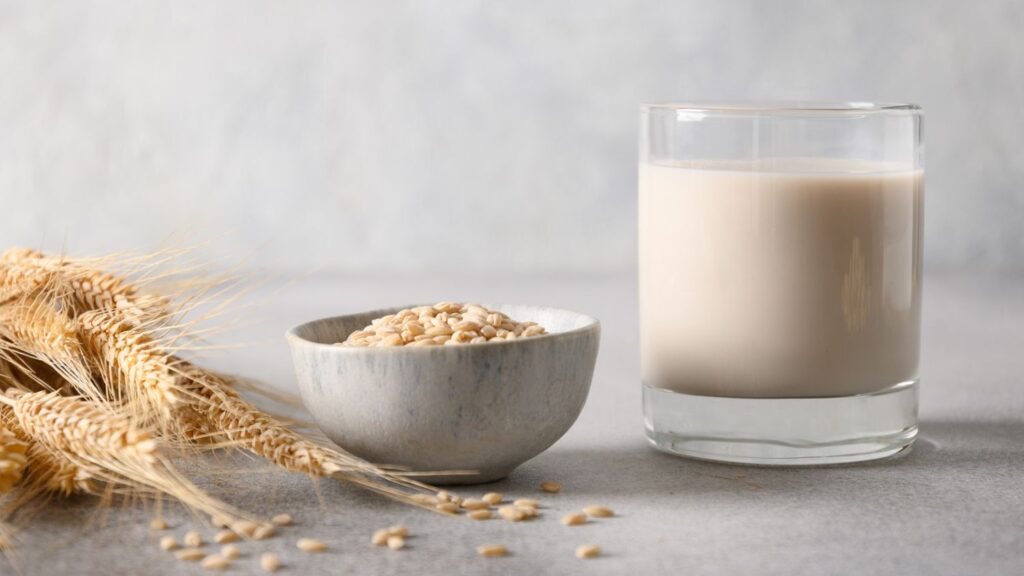
Drainville: Plant milks have always been one of the most successful products in this market. And that is only continuing to grow.
It’s partially because they aren’t trying to replace the taste of milk and cream directly, but rather the experience.
That rich, indulgent, smooth creaminess is what they’re after. Also, with oat or nut milks, the natural brown, nutty, and cereal notes work in their favor.
This is why, whether it’s indulgent better-for-you and clean labels, or unapologetic indulgent maximalism, we’re only scratching the surface of plant-based potential.
We’re already seeing this in cafes with alternative milk menus and cold foams. But it can also work in frozen novelties, puddings, cheesecakes, and even bakery items.

However, that doesn’t mean they don’t present many of the same inherent development challenges.
What plant-based flavor challenges do developers continue to face?
Drainville: As I mentioned before, taste and texture are always two of the biggest hurdles when developing with plant-based ingredients.
This can range from the typical earthy, beany, and grassy off-notes to unwanted bitterness, astringency, and even metallic aftertastes.
Texture-wise, different fats can change the perception of creaminess and mouthfeel, making it harder to match the natural indulgence of dairy.
Fortunately, you can overcome this with taste technologies like Edlong’s wide range of functional sweet browns. Additionally, our suite of masking, mouthfeel, and sweetness enhancement solutions can help.
How do taste technologies improve plant-based flavor?
Drainville: For starters, our functional sweet browns taste great. They’re indulgent, authentic, and memorable. Everything developers and consumers are looking for.
But thanks to Edlong’s expertise in all things dairy, they offer functionality that can overcome taste and texture challenges. This expertise elevates indulgence as well as the overall sensory experience of plant-based products.

One way they do this is by using characterizing flavor profiles to help with masking. Maybe you’re doing a plant-based pudding, but due to inherent off-notes, a typical vanilla won’t work. In this case, you’ll need a stronger profile to overcome the unwanted characteristics you might get from the almond milk used in the base. The same could go for something like the beany off-notes of higher-protein chickpea flour in a blondie or a cookie.
Using a profile like a creme brulee or a Dubai chocolate can give you a standout flavor and work with or mask the off-notes. These masking capabilities go even further when combined with our cutting-edge masking solutions. Specifically, solutions like our Super Masker™ are engineered to overcome the taste challenges of plant proteins.
Improve plant-based flavor with Edlong
Whether the goal is masking off-notes, enhancing sweetness, or improving mouthfeel, Edlong’s taste technologies are built to improve plant-based flavor in plant-based applications.
Another functionality of our sweet browns is sweetness enhancement.
We’ve talked a lot about how certain odors can increase perceived sweetness without added sugar. Pairing functional sweet browns with our other sweetness enhancement technologies can take better-for-you plant-based even further.
Lastly, there’s mouthfeel. This perception of creaminess and full-bodied mouthfeel is key to maximizing indulgence.
Building our functional sweet browns on a foundation of dairy lets them not only improve taste. It also brings the perception of mouthfeel back in line with expectations.
At the end of the day, whichever direction developers decide to take their plant-based formulations, taste and texture still have to hit the mark.
And that’s where Edlong can make sure your plant-based products do that and more.
Get a taste of what Edlong’s functional sweet browns can do.
Download our Functional Sweet Brown Recipe Book and get a personalized tasting with one of our experts!
Hungry for More? Download our 2027 Flavor Report and discover the flavor and moments that will shape the taste of 2027.